
Storing holiday décor can feel like its own season, especially when you pull out last year’s bins only to discover a glowing knot of wires, broken bulbs, and frustration. Learning how to store Christmas lights in a way that prevents damage and saves time is one of the most underrated parts of enjoying a smooth decorating season. It also protects your investment and keeps your lights shining bright year after year.
Below you’ll find a guide designed to be approachable, practical, and rooted in real-world experience.
What You’ll Find in This Guide
- Why Thoughtful Storage Makes a Big Difference
- Choosing the Right Containers
- The Best Way to Store Christmas Lights to Prevent Tangles
- Protecting Bulbs and Wiring the Right Way
- Smart Labeling That Saves You Time Next Season
- How to Store Lights When You Use Clips
- Where to Store Holiday Lights for the Best Longevity
- Why Some Lights Fail After Storage (And How to Avoid It)
- Cleaning Lights Before Storing Them
- Special Considerations for LED Lights
- How Professionals Handle Storage (And What You Can Learn From Them)
- Outdoor vs. Indoor Light Storage
- Bringing It All Together
Why Thoughtful Storage Makes a Big Difference
Most holiday lighting issues don’t actually happen on installation day. They start months earlier, with poor storage. When lights are tossed into a bin, the wires bend, the bulbs crack, and moisture sneaks in. By the time the next season arrives, homeowners often have to replace entire strands, not knowing the damage happened long before.
If you’ve ever gone to hang your lights only to find half a strand flickering, it might not be the electrical connection at all. It’s often the strain the wire endured while in storage. Knowing how to store holiday lights correctly turns this around and reduces waste, prevents damage, and saves you time.
Choosing the Right Containers
Not all storage bins are created equal. Picking the right one is the foundation of keeping lights in great condition.
Containers That Offer Real Protection
A sturdy, moisture-resistant container is essential for keeping your lights protected through the off-season. Thin plastic tubs often allow humidity to seep in and offer little protection if heavier items are stacked on top. Look for bins with tight-fitting lids that keep out dust and moisture, rigid walls that prevent wires from being crushed, and a design that stacks well if you store multiple décor items. Many homeowners use the same bins for years, and while that can work, it’s still important to check for warping or cracking. Even a slightly bowed container can put unnecessary pressure on delicate wiring.
Consider Clear Containers for Easy Visibility
You don’t want to open every bin to find your lights. See-through containers offer quick identification, especially when paired with a strong labeling system you’ll learn about later.
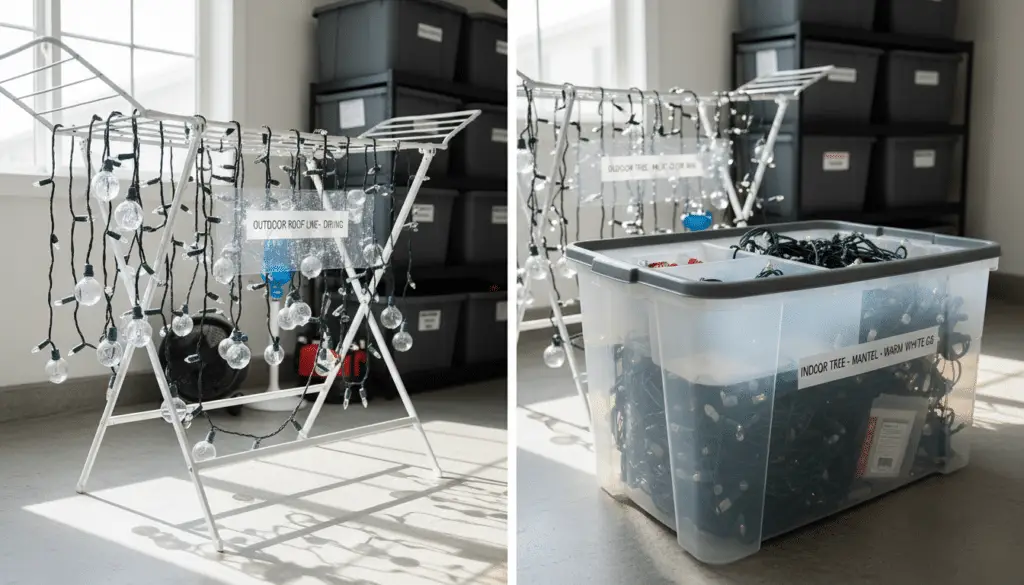
The Best Way to Store Christmas Lights to Prevent Tangles
You’re searching for the best way to store Christmas lights because, like most people, you’ve likely dealt with the dreaded annual knot. Thankfully, avoiding that tangled mess is completely doable with the right method.
The Cardboard Wrap Method
This is the most budget-friendly solution and can be made with items already in your house.
- Cut cardboard into a rectangle that fits easily into your bin.
- Cut small slits on two opposite edges.
- Insert the plug end into one slit.
- Wrap the lights around the board, sliding into slits as needed.
This reduces tension and keeps wires neatly organized. If a strand goes out next season, it’s easier to troubleshoot when the lights aren’t in a clump.
Heavy-Duty Spools
For those who want a more durable option, plastic light spools mimic what professionals use. They keep lights evenly coiled and prevent the bends that break internal wiring.
These are especially useful for:
- Long roofline strands
- Commercial-grade lights
- Color-changing or RGB strands
Storage Reels With Handles
Some homeowners prefer portable reels that allow you to walk and unwind lights as you install them. These come in handy if you have a large yard or multiple trees.
Protecting Bulbs and Wiring the Right Way
The most overlooked part of learning how to store Christmas lights is how to protect the bulbs themselves.
Avoid Tight Bending
When wires are tightly kinked, the copper inside can weaken. This leads to dark spots or full strand failure. Wrapping lights neatly, with no sharp bends, extends their lifespan significantly.
Separate Heavy Decorations
Avoid storing lights in the same bin as wreath hangers, metal stakes, garland ties, or roof clips. These items shift during storage and crack bulbs without you realizing it.
Keep Moisture Out
Even in airtight bins, temperature fluctuations can create condensation. Sachets designed to reduce moisture help prevent rust on contacts and eliminate that musty smell many people associate with attic storage.
Smart Labeling That Saves You Time Next Season
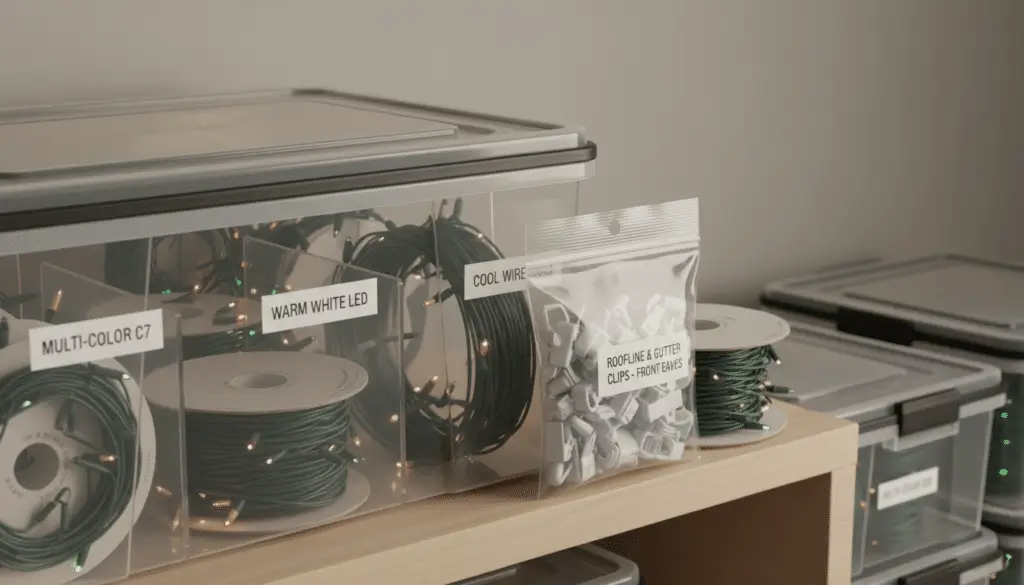
If you’ve ever stepped back after decorating and wondered how you’ll remember where each strand belongs next year, you’re in good company. Smart labeling is one of the easiest ways to stay organized and save yourself time during the next season. Labeling bins by location and tagging strands with simple number markers helps you instantly recognize their order and placement when you unpack everything again.
It also helps to jot down notes about any bulbs that burned out or sections that may need attention before the next install. Many homeowners take a quick photo of their completed display and tape it inside the storage container as a visual reference. Paired with good labeling habits, this small step removes the guesswork and makes the following year’s setup feel far more manageable.
How to Store Lights When You Use Clips
Clips make installation easier, but storing them alongside your lights often leads to scratches, broken bulbs, or crushed hardware. A better approach is to gather all clips into a small resealable pouch so they stay contained and protected. Labeling the pouch by location such as roofline, gutters, or shingles helps you remember exactly where each type was used.
Once everything is sorted, place the pouch in a separate smaller bin rather than mixing it with your lighting strands. This simple change reduces the pressure on bulbs, keeps clips from becoming brittle, and ensures everything is ready for smooth setup when the next holiday season arrives.
Keeping clips stored separately also helps you avoid unnecessary replacements. When each style of clip is grouped, labeled, and protected, you can easily see what you already have before the next season begins. This prevents overbuying and keeps your setup process efficient, organized, and cost-effective year after year.
Where to Store Holiday Lights for the Best Longevity
Not all storage locations offer the same protection. Temperature swings and humidity are the biggest threats to lighting longevity.
Attics
Attics are common storage locations, but they get extremely hot in southern climates. Heat can weaken wire insulation over time. If your attic is your only option, choose bins designed for higher temperatures.
Closets or Indoor Storage Rooms
These are ideal because temperatures remain stable, reducing stress on wiring.
Garages
Garages are fine as long as bins are airtight and placed high enough to avoid moisture from the ground.
Wherever you choose, consistency is more important than perfection. Lights need a predictable environment far more than a climate-controlled one.
Why Some Lights Fail After Storage (And How to Avoid It)
Strands often fail after storage because the wiring has been crushed by heavier items, exposed to moisture, or bent sharply enough to damage the internal connections. Even though these issues usually go unnoticed at the time, they tend to show up the moment you plug the lights in the following season. Each of these factors puts stress on the wiring, eventually leading to flickering sections or complete strand failure.
Giving your lights enough space to rest without pressure makes a significant difference. When strands are gently coiled, stored in a rigid container, and kept away from damp areas, they’re far less likely to develop hidden damage. With just a little extra care, most lighting issues become avoidable and your décor lasts much longer.
Cleaning Lights Before Storing Them
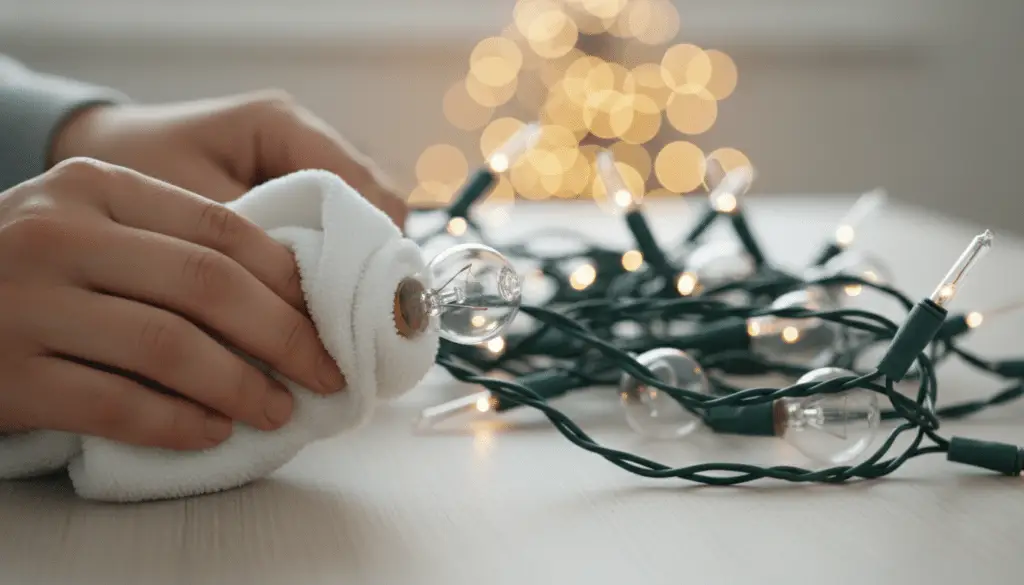
Cleaning your lights doesn’t have to be time-consuming. A simple routine can help prevent premature wear and keep your décor looking bright and consistent from year to year. The table below outlines a quick method that works well for most types of holiday lighting.
| Step | What to Do | Why It Matters |
| Unplug the lights | Ensure all strands are disconnected before handling | Prevents shocks and accidental damage |
| Wipe bulbs with a microfiber cloth | Gently remove dust and debris | Promotes even heating and extends bulb life |
| Check for cracked bulbs | Inspect each section as you clean | Allows early replacement so issues don’t worsen in storage |
A light layer of dust can cause bulbs to heat unevenly, which shortens their lifespan over time. Giving each strand a quick wipe and inspection ensures they’re clean, safe, and ready for a smooth decorating experience next season.
Special Considerations for LED Lights
LEDs tend to last longer than traditional incandescent bulbs, but they still benefit from careful handling and storage. They are more sensitive to moisture, so keeping them in a dry, sealed container is especially important. Over-bending can also damage the tiny solder points inside the wiring, which affects performance even if the exterior looks intact.
Since integrated LED bulbs can’t be replaced individually, storing these strands correctly becomes even more essential. LED lighting is often a larger investment, and protecting that investment through gentle coiling and moisture-free storage helps ensure your lights stay bright and reliable for many seasons.
How Professionals Handle Storage (And What You Can Learn From Them)
Professional lighting companies, especially family-owned teams serving Louisiana communities, rely on consistent storage habits to keep lights in excellent condition year after year. Each strand is individually wrapped to prevent tangles, moisture is carefully managed, and bulbs are inspected so any damaged ones can be replaced before the next season begins. Clips and hardware are always stored separately to avoid scratching or stressing the lights, and everything is labeled by home and by location to keep setups organized.
These practices aren’t limited to professionals. You can apply the same principles at home by wrapping strands neatly, keeping storage dry, separating accessories, and labeling where each set belongs. A little structure during storage makes installation far easier when the holidays roll around again.
Outdoor vs. Indoor Light Storage
Outdoor lights endure far more wear throughout the season, so the way you store them can make a noticeable difference in how long they last. Indoor lights are generally exposed to gentler conditions, yet they still benefit from careful handling and proper placement. The table below highlights simple guidelines for both so you can store each type confidently.
| Storage Type | Recommended Approach | Why It Helps |
| Outdoor Lights | Dry strands completely before storing | Prevents moisture damage and corrosion |
| Keep them out of areas where rodents are active | Reduces risk of chewing and frayed wiring | |
| Inspect plug ends for rust before packing | Ensures electrical safety for next season | |
| Indoor Lights | Coil strands loosely instead of wrapping tightly | Protects wire insulation from stress |
| Store separately from fragile ornaments | Prevents scratching and accidental breakage | |
| Place in a cool, dark storage area | Preserves insulation and prolongs strand life |
Storing indoor and outdoor lights with their unique needs in mind helps preserve their condition and keeps setup simple when the holidays return. A little extra attention during storage can save you time and prevent unnecessary replacements later on.
Bringing It All Together
Storing your lights properly is one of the most effective ways to save time, reduce stress, and protect your décor investment. Whether you use spools, cardboard wraps, or specialized bins, the goal is simple: prevent moisture, eliminate tangles, and provide a safe, organized resting place for your décor. Understanding how to store Christmas lights makes decorating next season far more enjoyable.
Taking a few extra minutes during the packing process truly pays off when the holidays return. Clear labeling, gentle handling, and consistent storage habits help preserve the lifespan of your décor and keep your lighting experience smooth from year to year. Instead of starting each season with frustration, you begin with confidence, knowing everything is organized, protected, and ready to shine again.